| |
To Do - For Thursday 27 March 2008
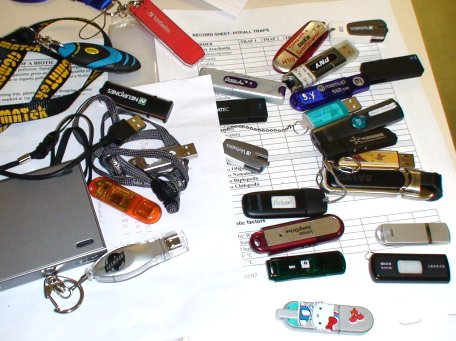
- Keep bringing your USB key and make sure you
have backups of your web site.
- Bring your B2i sheet - we should have time to
tick off several skills.
- In class, you should keep adding pages, links and
images.
- To make your pages nicer, try the following:
- change the background color of the page or try to put
an image as the background
- insert tables
- make an image into a link so that when people click on
the picture, they go to a new page
- insert an external link, that is to say one that goes
to another page - for example, your bibliography could be made up of links
to the original pages you used for your research
- make numbered or bulleted lists (like the one you are
reading now with 1, 2, 3 or A, B, C etc.)
|
| |
To Do - For Thursday 31 January 2008
- The groups which will present their work are Frankie &
Margot, Nora & Alexis and Theo & Jordan. Anyone who is presenting
and is worried that their USB key might not work can send their
presentation to me or to themself by email to be sure there is an extra
copy available tomorrow.
|
| |
To Do - For Thursday 17 January 2008
- We will be starting the presentations for the groups
which were named last week. During the presentations, the other
groups may not work on their presentations.
- Starting on the 24th of January, all groups should
be ready to present. We will not announce the names of the
students until the day of the presentation so everyone should come
prepared. It is suggested that you bring at least two copies of the
Power Point presentation so that if one is lost, erased or damaged, at
least there will be a backup. In addition, emailing it to yourself
or to Mr. Damon would be a good idea for a backup.
|
| |
To Do - For Thursday 29 November 2007
- We will continue assessing your work during
Phase I.
- You should begin Phase II which means preparing your
presentation. For this, begin by writing an outline of what you will
say: introduction, what is the main theme of your presentaion,
arguments, quotes, facts, etc., conclusion.
- Eventually you need to think about visual aids such as
illustrations, maps, graphs, photos, etc.
|
| |
To Do - For Thursday 15 November 2007
- On the 15th you will be assessed for your work during
Phase I. What does this mean? It means we will see if you have
done the following:
- you have a bibliography of at least 12 pertinent,
informative sources
- your bibliography has reliable information from
trustworthy sources
- you have a variety of sources: web sites, books,
magazines, newspapers...
- you have a complete bibliographical entry for each
source - remember to use Citation Machine for web sites, books,
magazines...
- you have an understanding of the main ideas contained
in your sources and you have written a summary in your own words of
the key concepts (no copy/paste)
- for any web pages, you have copied the entire text and
pasted it into a Word document so that in case it gets erased from the web
site, you still have it.
- you have stored your documents in a well-organized way
(i.e. on your USB key) and you have a good system for backing up your
documents for GI (i.e. on the school's server).
- If you are waiting for us to come check your
bibliography or if we have already checked it, you may start with Phase II
which is to start writing an outline (plan) of how you will present
your topic.
|
| |
To Do - Thursday 18 October 2007
- Continue to search for sources of information.
You have until the middle of November to work on the research part of your
project (see the calendar in the blue box below). You should have about a dozen sources. Some
groups have that many already, other groups have a lot of catching up to
do! In November, we will go into Phase II which is preparing your
presentations.
- When you are finished reading these instructions,
click on your team's names above to move to the part of this page which
lists your sources. If you find ones which have not been listed
there and you want to add them, please email them to me. Don't
forget to use
Citation
Machine.
- Double check that you have done everything from last
week (see 11 October below).
|
| |
|
| |
Calendar for Global Issues:
- 15 November - end of Phase I - your bibliographies
will be checked
- 22 November - Compos
- 29 November - students' research will be evaluated,
students start Phase II.
- 6 December - Phase II - preparing presentation
- 13 December - preparing presentation
- 20 December
|
| |
To Do - Thursday 11 October 2007
- Continue to search for sources of information.
You have until the middle of November to work on the research part of your
project (see the calendar in the blue box below). You should have about a dozen sources. Some
groups have that many already, other groups have a lot of catching up to
do! In November, we will go into Phase II which is preparing your
presentations.
- Please send me an email with the following
information:
- "Global Issues Group #__" in the subject line (with
your group number, of course)
- The names, classes and email addresses of each
member of your group. I would like to have email addresses for
everyone so that when I find an article which might interest your group,
I can send it to you.
- Put your refined research question.
- Paste your bibliography so far (do not send as an
attachment - put the bibliographical entries of each source directly in
the email.) Remember to use
Citation
Machine
- You can find my email address on the
Contact Me page.
- Here are some guidelines for working in Global
Issues which I wrote on the board last time.
- Each time you find a good article, copy the text and
paste all of it into a Word document. Use "paste special" and ask
for no formatting.
- Save the document (you can call it research.doc
or you can have separate articles in a folder called research).
- On your USB drive, you should have a folder called
Global Issues. Inside that folder should be another folder with
the names of the two students in your group (i.e. Tom and Bastien).
You should have the following documents in that folder:
- research.doc with text from web sites,
books, magazines
- ideas and comments.doc with text which you
have written
- Using
Citation
Machine, prepare a complete bibliographical entry for each
article you find and paste it at the end of the article.
- On a regular bases, be sure to make backups
of you entire Global Issues folder. It is best to have a copy at
home and another copy on your partner's USB drive. You can have an
extra copy in your folder on the school's network, too.
- If your group has not been downstairs to the library,
you need to go soon...
|
| |
To Do - Thursday 4 October 2007
- Continue to search for sources of information.
Did you try going to a news site (such as CNN, Le Monde, etc.) and search
those sites for your topic? Otherwise, Google News might have
interesting articles.
- Each time you find a useful source, put it through
Citation Machine to add it to your bibliography.
- Also, every article you find should be copied and
pasted into a Word document on your USB drive to save it. Use "paste
special" (collage spécial) and ask for unformatted text so that you
don't get all the advertisements, etc. You just get the text from
the web site.
- Do not change your topic! Any modifications must
be discussed with your teachers.
- It is important that each team gets a chance to go to
the library to find magazine articles, books or newspapers.
- Last but not least, when you are using the computers,
please make sure that both students get a turn using the computer.
Try to copy all files onto each student's USB drive and / or email the
files to each other so they do not get lost.
|
| |
To Do - Thursday 27 September 2007
- Email a list of at least 3 of your sources along with
the names of the students in your group and the research question that you
have been working on. See the How to
Contact Mr. Damon page for my email address.
- If you have not tried it yet, try
Citation Machine on one or more of your sources.
To Do - Thursday 20 September 2007
- Most of you had a first idea or two last week - this
week you need to have refined your idea into something that fits into one
of the categories below.
- Create a folder on your USB drive (which now has your
name on it, right?) and call it "Global Issues". Start putting
research into that folder.
- Every time you find an article, a photo, map, graph,
etc., be sure to cite your source correctly. Use
Citation Machine to help you.
|


|
To Do for Thursday 13 September 2007
- Decide who you will be working with - you must work
in pairs. Do not ask if you can be in groups of 3 or 4.
There are only 2 students per group. You do not have to be with your
best friend! You can make a new friend.
- Each student should bring a USB thumb drive to class
every week. Be sure your
name is on the outside somewhere. If ever we collect them, we need to
know whose is whose! Also, if you lose it, we know who to return it
to. If you are buying a new one, I do not recommend the U3 Smart
drives in class. For the moment, they are not compatible with Mac or
Vista. Also, 1 or 2 Gb is enough - do not spend more than 25€ for
this.

- Come with a list of three ideas of what you
would be interested in studying this year. The ideas must deal with
the themes of the 3ème Civics program (Education civique):
A - La citoyenneté
- What does it mean to be a citizen? What is the link between
citizenship and democracy? What are the rights of citizens and what
are their responsibilities or duties? Is citizenship the same thing
as nationality?
B - La nationalité française à
compter du 1er septembre 1998
- If you were born in France to non-French parents,
what happens when you turn 18? What conditions need to be fulfilled
in order to become a French citizen?
C - Les valeurs républicaines
- What are republican values? What connections are there with the
Declaration of Human Rights? How has history demonstrated these
values? Are values such as the respect
for human dignity universal values or are they unique to republican
values? Do other countries have similar values?
D - La laïcité
- What are the orgins of secular (non-religious) values in France?
How was/is the church separated from the state? How does a secular
state remain respectful of religious groups?
E - La démocratie et les institutions de
la République - What is democracy?
What systems need to be in place in order for democracy to function?
What do all citizens need to do in order for a democracy to function
correctly?
F - Les institutions françaises et l'Union
européenne - How has the Euro
changed the way the French and Europeans do business? What have been
the advantages and consequences of the switch to the Euro?
G - Les forces politiques et
sociales - What role do each of
these institutions play in generating social change: political
parties, trade unions, or non-governmental organizations such as
Greenpeace?
H - L'opinion publique
- How can we know what the public opinion is concerning a particular
topic? How do citizens or politicians determine what the people want?
How important a role does each of the following play: opinion polls,
media coverage, lobbyists?
I - Médias et démocratie
- How much do citizens rely on the media to help them make informed
decisions? What are the different forms of "media" today (TV, radio,
internet, the written press...) How much power does the media have
over public opinion and how can that power be measured? Can certain
media create a "virtual world" that distorts or misrepresents the "real
world"?
J - L'Etat en question
- What role does a state play in the changing world of globalization?
How involved should the state be in dealing with problems of unemployment,
national defense, international relations? How has the
decentralization of the state away from Paris in the past decades affected
French citizens?
K - L'expertise technique et la démocratie
- In a democracy, how important is it that citizens be informed of the
scientific and medical research and progress made in their country?
How much of a voice should private citizens have about what experiments
their country's scientists do? What can be done to be sure that
contraversial research, notably in biotechnology; is carried out in an
ethical way?
L - Les femmes dans la vie
politique - What discriminations and
prejudices exist today against women in everyday life and in politics?
If such inequalities are clearly denounced in the Declaration of Human
Rights, how is it possible that they still exist today? Should laws
be passed to force political parties to have an equal number of men and
women?
M - La Défense et la paix
- What does the Department of Defense represent for citizens today?
How has the abolition of the draft in France changed the way people feel
about the military? How has the role of the military changed since
the end of the Cold War? Why do we need a defense system - what is
worth defending?
|
| |
|
 |
Research for Group 1 - Tom & Bastien
Le Gouvernement et la technologie : Le passeport biométrique
et les tests ADN.
Bibliographie :
|
| |
Research for Group 2 - Soubhi &
Olivier
How Euro Changes Europe
Source: Solman, Paul. BANKING ON THE
EURO. FEBRUARY 24, 1997. PBS. 27 Sep 2007 <http://www.pbs.org/newshour/bb/europe/jan-june97/euro_2-24.html>.
Taylor, Grantham. "Do you think the Euro has changed Europe for the
better?." Do you think the Euro has changed Europe for the better?
15/11/2006 4/10/2007 <http://money.howstuffworks.com/euro-0-reader-opinions-12077.htm>.
Dupont, Véronique. "Critiqué sur l'euro, Trichet conseille à la France de
mieux gérer ses finances." Critiqué sur l'euro, Trichet conseille à la
France de mieux gérer ses finances 23/09/2007 4/10/2007 <http://fr.biz.yahoo.com/23092007/202/critique-sur-l-euro-trichet-conseille-la-france-de-mieux.html>.
Brehon, Nicolas-Jean. Du troc à l'euro. 2001. France: Père Castor
Flammarion, 1998. (141-161)
PSZCZÓ£KA, IRENEUSZ. "Advantages and Disadvantages of Introducing the
Euro." Advantages and Disadvantages of Introducing the Euro. 2005. 18
Oct 2007 <http://www.wydawnictwa.wsfib.edu.pl/Polska_w_UE/Pszcz%F3%B3ka.pdf>.
the European Commission's Delegation, "What are the advantages of the
euro ?." What are the advantages of the euro ?. 01/01/2002. 18 Oct
2007 <http://www.eudelbangladesh.org/en/euro_and_you/1_advantages.htm>.
Obringer, Lee Ann. "Disadvantages and Risks of the Euro."
Disadvantages and Risks of the Euro. January 1, 2002. 18 Oct 2007
<http://money.howstuffworks.com/euro11.htm>.
Obringer, Lee Ann. "Advantages of the Euro." Advantages of the Euro.
January 1, 2002. 18 Oct 2007 <http://money.howstuffworks.com/euro10.htm>.
CHAZALON, Delphine. "Les incidences comptables et fiscales." Les
incidences comptables et fiscales. 25 Oct 2007 <http://www.ecogesam.ac-aix-marseille.fr/Resped/Ecogen/euroconf/eurofin.htm>.
Lefebvre, Claire. "L'Europe après l'euro : conséquences de l'Union."
L'Europe après l'euro : conséquences de l'Union. 25 Oct 2007 <http://www.cepii.fr/francgraph/publications/ecomond/dossierstrat/1999ch5.pdf>.
RIOST, "CONSEQUENCES DE L’INTRODUCTION DE L’EURO DANS." CONSEQUENCES
DE L’INTRODUCTION DE L’EURO DANS. 25 Oct 2007 <ã Éditions La Découverte,
collection Repères, Paris, 1998.>.
Pisani Ferry, Jean. "Politique budgétaire : tirer les conséquences de
l'euro." Politique budgétaire : tirer les conséquences de l'euro.
March 2007. 25 Oct 2007 <http://www.alternatives-economiques.fr/politique-budgetaire---tirer-les-consequences-de-l-euro_fr_art_308_28893.html>.
Jean-Jacques, Rey. "Les conséquences possibles pour l'euro de la crise
constitutionnelle, après les référendums." Les conséquences possibles
pour l'euro de la crise constitutionnelle, après les référendums. March
2007. 25 Oct 2007 <http://www.geopolitis.net/EUROPE%20EN%20FORMATION/consequences%20possibles%20pour%20l'euro.pdf>.
|
 |
Research for Group 3 - Nikita & Max
Bosnia
|
| |
Research for Group 4 - James and
Romain
Research Question: If you were born in France to
non-French parents, what happens when you turn 18? What conditions need to
be fulfilled in order to become a French citizen?
|
 |
Research for Group 5 - Marie & Noemie
|
| |
Research for Group 6 - Lucille &
Caroline
Our subject is : women in politics.
|
 |
Research for Group 7 - Frankie &
Margot
Le sida dans le monde ?
Quels sont ses effets ?
Combien de personnes dans le monde sont touchés ?
|
| |
Research for Group 8 - Nora & Alexis
(nothing received from this group yet)
|
 |
Research for Group 9 - Theo & Jordan
1. science humaine n° 185 Août- Septembre 2007 page 8
2. Le monde 2 page 22-32 n° 141 28 octobre 2006
3. Alternative économique n° 258 page 41
4. Le monde dossier et document n° Juin 2007 page 8 partie science
5.
www.pvpusd.k12.ca.us/pvhigh/point/05%20on%20campus.pdf
6.
www.01net.com/editorial/298974/hospitalises-pour-addiction-aux-jeux-en-ligne/
7.
www.jeuxonline.info/article/mmog_addiction101
8.
http://fr.wikipedia.org/wiki/D%C3%A9pendance_au_jeu_vid%C3%A9o
9.
www.suliworld.com/2005/08/21/world-of-warcraft-700-heures-de-jeu-apres/
10.
www.beyondthegame.fr/index.php?2007/10/07/98-les-criteres-d-addiction
11.
http://www.lefigaro.fr/debats/20061007.FIG000000675_world_of_warcraft_comment
_un_jeu_video_devient_un_phenomene_culturel.html
12.
http://blog.bretagne-balades.org/index.php/2006/01/20/214-le-jte-de-tf1-denonce-les-dangers-du-jeux-online
|
| |
Research for Group 10 - Marion &
Alexandrine
Sujet : Quels sont les dangers et les droits des journalistes ?
Bibliographie :
journeaux:
- le monde dossier document n354
- le monde dossier document n362
- courrier international n232
|
 |
Research for Group 11 - Jeanne &
Sharon
Research question: secularism (laïcité)
|
| |
Research for Group 12 - Dorelle &
Pauline
women in the work force
http://www.educnet.education.fr/insee/par/travail/accueiltravail.htm
http://www.cite-sciences.fr/francais/web_cite/informer/tec_met/travail/femmes.htm$*
http://www.novethic.fr/novethic/site/article/index.jsp?id=11357&titre=Une%20loi%20pour%20l'%C3%A9galit%C3%A9%20
professionnelle%20entre%20hommes%20et%20femmes
http://www.penelopes.org/xarticle.php3?id_article=5278
Leclair, Marie-Louise. "Parité." la parité hommes - femmes Janvier 2005 4/10
<http://www.educnet.education.fr/insee/par/travail/accueiltravail.htm>.
Delphine GARDEY, Discriminations contre les femmes
<http://www.cite-sciences.fr/francais/web_cite/informer/tec_met/travail/femmes.htm>
LICR, "Le marxisme et la libération des femmes." Le double travail des
femmes travailleuses 10 août 2002 18/10 <http://www.pouvoir-ouvrier.org/femmes/liberation/LdF6,double.html>
.
Blanc, Michel. "Revenus-Salaires." 2005 25/10/2007 <http://www.insee.fr/fr/ffc/chifcle_fiche.asp?ref_id=NATFPS04101&tab_id=38&souspop=2>
.
Rochette, Emmanuel. "Parité." Une loi pour l'égalité professionnelle entre
hommes et femmes 13/11/2001 25/10/2007 <http://www.novethic.fr/novethic/site/article/index.jsp?id=11357&titre=Une%20loi%20pour%20l'%C3%A9
galit%C3%A9%20professionnelle%20entre%20hommes%20et%20femmes>
|
 |
Research for Group 13 - Nicolas &
Julie
Subject: Irak/ US
Sites:
|