| |
|
| |
To Do for Friday 4 March 2011:
- Friday's lesson will be a Project work session so bring your USB key,
logbook and anything else you need.
|
| |
|
| |
Revision for the Bac Blanc Week in
February 2011:
Have a look at my compositions
groupées revision guide. It contains suggestions
for successful revision and test-taking skills.
|
| |
|
| |
|
| |
|
| |
Revision for the Bac Blanc Week in
November 2010:
Have a look at my compositions
groupées revision guide. It contains suggestions
for successful revision and test-taking skills.
|
| |
|
| |
Project work Calendar & Deadlines:
- Tuesday October 5th - draft of criterion G and criterion
H of the report.
- use your logbooks and my comments to get inspiration for what to
write
- use the checklist to make sure you don't forget anything - also,
look at the official ITGS Program Guide to see how you will be graded
for the report. (starting on page 45 "Assessment criteria for the
project")
- write in prose as much as possible but tables and screenshots are
also expected
- G (identifying the problem) should be about 300 words long.
Use the following heading for this section: "Identifying the
problem within a social context"
- H (feasibility study) should be about 350 words long. Use the
following heading for this section: "Analysis and feasibility
study"
- Friday October 8th - logbooks checked for criterion J (testing)
- check the checklist to make sure you have done everything
- Remember the order:
technical tester > refinements > testing with client > refinements >
testing with end users
- be sure to have "before" & "after" screenshots for each refinement
as well as a justification for each refinement
- Tuesday October 12th - draft of criterion I due.
- I (planning) should be about 1000 words long. Use the
following heading for this section: "Planning and developing
the chosen IT solution"
- Tuesday October 19th - draft of criterion J due & product given
in on CD
- J (testing) should be about 550 words long. Use the
following heading for this section: "Testing and evaluating the
solution"
- burn your product onto a CD and bring it to class. The CD
should have the following things:
- a working version of your product as it was shown during the
end-user testing
- a "readme.txt" file for information about what is on the disk
- if you made a web page, a link to the site
- Friday 5th of November - logbooks will be checked for the last
criterion - K (assessing the social significance of the project).
See checklist for details.
- Tuesday November 9th - draft of criterion K due.
- K (social significance) should be about 300 words long.
Use the following heading for this section: "Assessing the
social significance of the product".
- Once you get back all the comments for the drafts, we can proceed with
the final report. The final report will most likely be due at the
end of November / beginning of December and will be collected in Homeroom.
(Date to be annouced later).
|
| |
|
| |
Project work in September:
- students should be finishing up the Beta Testing phase soon.
Remember the order:
technical tester > refinements > testing with client > refinements >
testing with end users
- At each of the steps, you need screenshots (before and after
refinements) which will be included in your final report. Also, each
of the 3 sets of testers should have questionnaires which have been filled
out (by hand, preferably). These should be scanned and included in
the final report.
- Next time in class we will go over a calendar of when I check log
books next and when I will start asking for rough drafts of each section
of the report. I like to break up the rough draft into chunks so
that you don't have to do it all at once.
ITGS Exended Essay work in September:
- follow the suggestions we went over in our meeting and go through the
EE checklist
- be sure that your primary research is used to either support or refute
what your secondary research says
-
|
| |
|
| |
Recommended Outing - September 11th or 12th:
- This weekend is the Festival du Jeu Vidéo
at the Porte de Versailles Expo center from 10:00 to 19:00. Check
out the official web site
here. Tickets are less than 10€ and are available at the door or
in advance from ticket agencies such as the Fnac.
- There is a series of conferences on Saturday and one which would be
interesting for ITGS is at 14:00 called "the History of Video Games".
There are also opportunities to meet the men and women who create the
games.
|
| |
Back to School 2010
I hope you have all had an excellent summer.
Our objectives for this year in ITGS are the following:
- finish up IA Project work
- complete the coverage of the program
- become experts in answering Paper 1-type questions and Paper 2-type
questions
- for those of you who are doing Extended Essays with me, we need to
complete them!
|
| |
|
| |
|
| |
 |
| |
From Première:
|
 |
Revision for the Testing Week in
May 2010:
Have a look at my compositions
groupées revision guide. It contains suggestions
for successful revision and test-taking skills.
|
| |
|
| |
|
| |
|
| |
|
|
Revision for the Bac Blanc Week in
February 2010:
Have a look at my compositions
groupées revision guide. It contains suggestions
for successful revision and test-taking skills.
|
| |
|
| |
To Do for Friday 29 January 2010:
- Logbooks will be collected and checked for Criterion G (see pink box
below).
|
| |
Project Work
Here is what you should be working on now for your Internal Assessment
Project work:
- By now, you should already have a client who has a need for an IT
solution
- You should be following the checklist which is printed in the log book
for Criterion G
- This first criterion deals with the problem, not the solution.
You should be meeting with your client to find out how the current
situation works and what is wrong with it (see the questions on the
checklist to know what you should be saying in the logbook).
- Although you probably have a solution in mind, please do not talk
about it yet. Only use the term "IT solution". So if your
client says, "I think a web site would help raise
awareness of my association," you write in your logbook under
Criterion G that "the client thinks an IT
solution would help raise awareness of her associaion."
Deadline: Friday 29th of January - logbooks will be
collected in class and checked to see if you have answered all the questions
in the checklist under Criterion G. Note that students
participating in the HMUN need to pass their logbooks in earlier - for
example, in class on Friday the 22nd or at the beginning of the following
week (see my schedule to see where you can find
me). |
| |
|
|
Revision for the Bac Blanc
practice exams in November 2008:
- All of Section 1:
- All the social and ethical issues
- Be sure to know the definitions given in the very beginning of the IB
Programme Guide for ITGS - in the section called "Nature of the Subject",
definitions are given for information technology, social impact,
ethical considerations and what an information system is.
- Also, the section called "Methodologies for analysing social impact
and ethical considerations" has examples of the key questions we
have been asking when we look at an IT problem in a social context (such
as "What are the advantages and disadvantages for the stakeholders?").
- The following sections of Topic 2:
- 2.1.1 Systems fundamentals
- 2.2.1 Software fundamentals (we will do this after the
vacation)
- The Analysis Triangle - be sure to be familar with this way of
analyzing ITGS issues in their proper context.
Remember, when you study, always follow this order:
- start with the IB Programme Guide for ITGS
to see what the assessment statements are (i.e. "evaluate the social and
ethical issues involved in the use of software..")
- use the guide to help you grasp the difference
between each command term (define, identify, describe, outline,
explain, evaluate...)
- refer to any class notes you have
- double check that you have memorized all the IT vocabulary terms (this is what flash cards are for) -
you should have a few dozen by now and you should know them in both
directions: word to definition and definition to word.
Have a look at my compositions
groupées revision guide. It contains suggestions
for successful revision and test-taking skills.
|
| |
|
| |
|
| |
At the beginning of the year:
- Be sure you have iTunes on your computer and subscribe to the two
podcasts at the top of this page. Contact me by email if it does not
work - see my How to Contact Mr. Damon page.
- You will need an ITGS notebook, binder or folder.
It is up to you to decide how you want to organize your papers.
There will be notes, photocopies, homeworks and quizzes to keep organized.
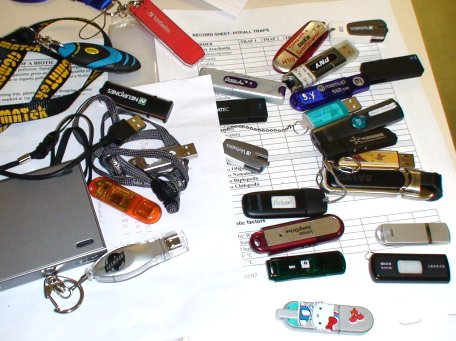
- Each student should have a USB thumb drive. Be sure your
name is on the outside somewhere. We need to
know whose is whose. Also, if you lose it, we know who to return it
to. If you are buying a new one, I do not recommend the U3 Smart
drives in class. For the moment, they are not compatible with Mac or
Vista. Also, 2 or 4 Gb is enough - do not spend more than 25€ for
this.
- Copy onto your USB drive the IB Programme Guide for ITGS. You should also have the
Academic Honesty guide and the Extended Essay guide on the USB drive. I recommend that you create a
folder for each subject.
|
| |
|